Master Your Time with a Customizable Daily Log Book
In a world overflowing with tasks and distractions, the simple act of tracking your time can be transformative. A Daily Time Log Book is more than just a notebook; it's a structured tool designed to help you capture where your hours truly go. At its core, it is a dedicated space for recording activities, tasks, and durations throughout your day, providing a clear, factual record of your time expenditure. This practice moves beyond guesswork, offering concrete data that empowers better decisions.
The Power of Knowing Your Day
The main purpose of using a Daily Time Log Book is to cultivate awareness. Many of us operate on autopilot, losing valuable hours to unplanned activities or inefficiency. By logging your time, you shift from being passive to becoming an active manager of your most limited resource. The characteristic value of this tool lies in its simplicity and honesty. It doesn’t judge or automate; it simply asks you to observe and document. This raw data becomes the foundation for improving productivity, reducing stress, and achieving a more balanced life.
Its appeal is broad because the need is universal. Whether you feel constantly busy but unproductive, struggle to bill clients accurately, or simply want to carve out more time for hobbies, a time log provides the evidence you need. It supports goals like completing a personal project, launching a small business, or mastering a new skill by revealing how much time these endeavors actually require. It solves the problem of "time blindness," where days blur together without a sense of accomplishment.
Practical Applications Across Life and Work
The utility of a Daily Time Log Book stretches across numerous contexts. For freelancers and consultants, it’s an indispensable tool for client billing and project scoping, ensuring every working minute is accounted for and billable. Entrepreneurs can use it to analyze where their focus is going—is too much time spent on administrative tasks versus strategy? Educators and students might log study sessions or lesson preparation to optimize their schedules.
Even in personal and creative realms, its benefits are profound. A blogger can track the time spent on writing, research, and promotion to better plan content calendars. A hobbyist learning guitar or painting can use the log to ensure consistent, dedicated practice sessions. For anyone aiming for a healthier lifestyle, logging time can help balance work, exercise, family, and self-care, making intentions visible and manageable.
Getting Started: A Simple Example
Imagine a typical Tuesday. Instead of just going through the motions, you have your log book open. From 9:00 AM to 10:30 AM, you note "Deep work on project proposal." From 10:30 to 11:00, you honestly record "Unscheduled emails & social media." This immediate feedback allows you to adjust. Perhaps you notice that your most focused work happens in the early morning, so you protect that time going forward. The log isn't about perfection; it's about creating a realistic map of your day so you can navigate it more intentionally.
Choosing a Tool Designed for Success
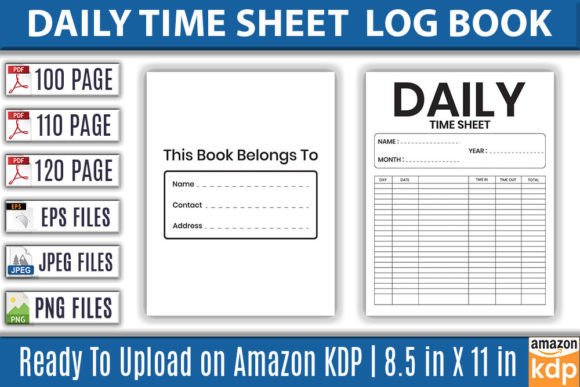
If you're considering integrating a time log into your routine, the format and quality of the tool itself matter. A well-designed interior, ready for use, removes friction and supports consistency. For instance, a KDP-tested Daily Time Log Book interior with options for 100, 110, or 120 pages offers flexibility for different commitment levels—a 100-page log for a quarterly experiment, or a 120-page version for a full year.
The professional 8.5×11 inch trim size provides ample space for clear entries without feeling cramped. The assurance of 300 DPI quality and no bleed settings means the printed result will be crisp and clean, important for a tool you’ll use daily. The fact that it’s KDP tested confirms its technical readiness for publishing, giving creators and sellers confidence.
Versatility for Creators and Users
Beyond the standard print PDF for instant download, having access to editable original EPS files, transparent background PNGs, and high-resolution JPG bonus files adds significant value. This suite of formats means the log book is not just a static product. A small business owner can lightly customize it for their team. A marketer selling digital products can use the transparent elements in their own promotions. This adaptability makes it a robust asset for both end-users and those looking to build upon it.
Important Considerations Before You Begin
Before you start logging, reflect on your primary objective. Is it for billing, productivity analysis, or personal balance? This will guide how detailed your entries need to be. Also, consider your own honesty—the log is only useful if you record time accurately, even for "unproductive" periods. The commitment is minimal but requires a daily habit. Choosing a log with a clean, uncluttered design, like one with a simple no-bleed layout, can help minimize distraction and keep the focus on the data itself.
Finally, remember that a Daily Time Log Book is a diagnostic tool, not a solution in itself. The magic happens when you review your logs weekly or monthly, spot patterns, and then make informed changes to your schedule, habits, and commitments. It turns vague feelings of being "busy" into actionable insights, paving the way for a more controlled and purposeful use of your days, regardless of your profession or passion.