The Art of the Fishing Log: Enhancing Your Maritime Adventures
For centuries, fishermen have ventured into rivers, lakes, and oceans, driven by a blend of passion, tradition, and the pursuit of sustenance. Yet, amidst the thrill of the catch and the serenity of the water, a crucial element of the angler’s craft has often been overlooked: the systematic recording of the experience. Today, this practice is being revitalized through the Journal de Bord Pêche, a dedicated fishing logbook. More than a simple notebook, it represents a transformative tool for anyone who casts a line, turning fleeting memories into enduring knowledge and elevating fishing from a pastime into a refined discipline.
What is a Fishing Logbook?
A fishing logbook, or journal de bord, is a structured record where an angler details every aspect of a fishing trip. Imagine it as a captain’s log for your personal maritime expeditions. It goes far beyond jotting down “caught a big one.” Instead, it methodically captures data such as date, time, location, weather conditions, water temperature, tides, lunar phase, bait or lure used, species caught, their size, and observations about fish behavior. This compilation of empirical data creates a personalized encyclopedia of your fishing experiences.
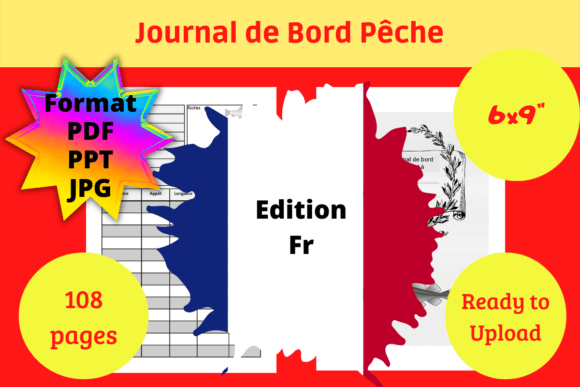
The Journal de Bord Pêche Edition française is a prime example of such a resource, meticulously designed for the French-speaking angler. Presented as a 108-page PDF file ready for download on Amazon KDP, its 6x9 inch format offers a practical and portable size. The interior includes a first-page identification section and multiple replicable template pages to fill in, providing a ready-made framework for consistency and ease.
The Core Purpose: From Memory to Mastery
The fundamental purpose of a fishing log is to convert instinct and anecdote into pattern and insight. Human memory is fallible; we forget subtle details that might be critical. By consistently logging trips, you create a searchable database of your own successes and failures. This allows you to answer questions like: “Do I catch more bass on cloudy mornings in spring using soft plastics?” or “Is the fish activity at my favorite coastal spot significantly better during a rising tide?” The logbook provides evidence-based answers, moving you from guessing to knowing.
The Significance of a Systematic Record
Why is this practice so significant? Its value permeates multiple layers of the fishing experience.
- Improved Success Rates: The most direct benefit is becoming a more effective angler. By analyzing past logs, you can identify patterns and replicate successful conditions, increasing your catch rate over time.
- Enhanced Learning and Skill Development: Fishing is a complex interaction with a dynamic natural environment. The log forces you to observe more keenly—not just the fish, but everything around you. This deepens your understanding of ecology, hydrology, and animal behavior.
- Preservation of Memories: Beyond statistics, a logbook serves as a personal narrative. Recording the camaraderie of a friend’s first catch, the beauty of a sunrise over a misty lake, or the challenge of a particular day turns the journal into a cherished memoir, a history of your relationship with nature.
- Contributing to Conservation: Detailed logs can also serve a broader purpose. Aggregated data from many anglers about species, sizes, and locations can inform local conservation efforts and sustainable fishing practices, making you a citizen scientist.
Common Misunderstandings
Some may assume that keeping a log is tedious, only for professional guides or competitive tournament anglers. This is a misconception. The modern templates, like those in the ready-to-use KDP PDF, simplify the process dramatically. It takes only a few minutes post-trip to fill in the key fields. Furthermore, its value is universal—the beginner learns faster, the experienced angler fine-tunes their art, and the casual fisherman enhances the enjoyment and meaning of each outing. It is not about complexity; it’s about intentionality.
The Journal de Bord Pêche in Modern Life
In today’s world, where technology often distracts us from direct experience, the act of physically or digitally recording a fishing trip grounds us in the moment. It complements, rather than replaces, the digital age. While apps exist for logging, a dedicated physical logbook in a 6x9 format offers a tangible, focused, and uninterrupted practice. It fits seamlessly into modern pursuits of mindfulness, outdoor therapy, and hobby-based learning.
For work and business, the principles behind the fishing log—data collection, analysis, and iterative improvement—are directly analogous to professional processes. Anglers unknowingly practice a form of continuous improvement and project debriefing. In education, it’s a superb tool for teaching children about nature, science, and patience. For creativity, the journal can include sketches, poems, or reflections, blending empirical tracking with artistic expression.
A Practical Example: Using the Template Pages
Let’s walk through a hypothetical entry using a standard page from the Journal de Bord Pêche. After a trip to Lake Léman, you would fill in:
- Identification: Date: 15/04/2023; Angler: Jean Dupont; Companion: Sophie.
- Conditions: Time: 06:30 - 11:00; Weather: Partially cloudy, light SW wind; Water Temp: 12°C; Lunar Phase: New moon.
- Tackle & Technique: Rod: Spinning; Line: 8lb fluorocarbon; Lure: Small silver spinner; Depth: 3-5 meters.
- Results: Species: Perch (5), Brown Trout (1); Size: Perch 20-25cm, Trout 35cm; Notes: Trout caught near rocky outcrop at 10:00. Perch active in shallow weed beds early morning.
- Observations: Saw several bird species diving. Water clarity was excellent.
Over several trips, you could compare these entries. You might discover that trout in this lake are most active in spring mornings with high water clarity, a pattern invisible without systematic recording.
Optimizing Your Practice with a Ready-Made Resource
Creating your own log from scratch requires discipline and design effort. The availability of a professionally structured intérieur en format PDF, prêt à télécharger on platforms like Amazon KDP, removes these barriers. The 108-page count ensures longevity, allowing for years of entries. The page d'identification and page type à remplir provide a consistent framework, which is key for comparative analysis. This convenience empowers anglers to adopt this beneficial habit immediately.
Building a Broader Understanding
Embracing a fishing logbook fosters a holistic view of angling. It shifts the focus from the solitary goal of “catching fish” to engaging with the entire ecosystem and your personal journey within it. You become an observer, a learner, and a historian of your own adventures. This broader understanding enriches the activity, making every trip valuable—whether the catch was bountiful or not. The data becomes a story, and the story becomes wisdom.
Conclusion: Your Companion on the Water
The Journal de Bord Pêche and its Edition française are more than products; they are invitations to a deeper, more meaningful engagement with fishing. By providing a ready-to-use, structured interior in a convenient PDF format for KDP, they offer a practical gateway to this practice. Whether you are a novice seeking to learn, an enthusiast aiming to improve, or a veteran wishing to preserve a lifetime of memories, a dedicated fishing logbook stands as your most valuable companion on the water. It transforms the ephemeral into the eternal, ensuring that every cast, every ripple, and every catch contributes to a greater masterpiece: your own evolving mastery and cherished narrative of the angler’s life.