Beyond the List: The Anatomy of an Effective New Year Resolution Planner
Every December, millions of people engage in a familiar ritual: scribbling a list of aspirations on a scrap of paper, declaring them their "New Year's resolutions." By February, the list is often forgotten, buried under the routine of daily life. This cycle of hope and abandonment isn't necessarily a failure of willpower; it's frequently a failure of methodology. A simple list is a declaration of intent, but it lacks the structure to translate intent into sustained action. This is where the concept of a dedicated New Year Resolution Planner diverges from tradition, offering a systematic framework designed to bridge the gap between ambition and achievement.
The Structural Core of a Resolution Planner
A true planner is not merely a blank notebook with "2024" printed on the cover. It is an engineered tool, built around psychological principles of goal-setting and behavioral change. Its architecture typically moves through several critical phases, each demanding different kinds of engagement from the user.
Phase One: Reflection and Foundation
Effective change is rooted in honest self-assessment. A robust planner begins not with goals, but with prompts for reflection on the previous year. This might include sections for identifying what worked well, what challenges persisted, and what lessons were learned. This process shifts the mindset from a vague "I should do better" to a specific "Based on my last year, I need to address X." It grounds resolutions in personal context, making them more relevant and harder to dismiss.
Phase Two: Goal Specification and Deconstruction
Here, the planner attacks the primary weakness of the traditional list: vagueness. Instead of a line like "Get healthy," the tool guides the user to apply frameworks like SMART criteria—ensuring goals are Specific, Measurable, Achievable, Relevant, and Time-bound. "Get healthy" might become "Walk 30 minutes five days a week and reduce processed sugar intake to two servings per week by Q2." Following specification, the planner provides space to deconstruct each major resolution into sub-tasks or quarterly milestones. This breaks down a potentially overwhelming annual goal into a series of manageable, near-term actions.
Phase Three: Resource and Obstacle Mapping
A unique characteristic of a formal planner is its focus on logistics and anticipation. It encourages users to list the resources they'll need—perhaps a new gym membership, a cooking app, or a time management course—and, more importantly, to anticipate potential obstacles. By pre-identifying common barriers like time constraints, social pressures, or motivational dips, the user can develop contingency plans. This proactive problem-solving is rarely part of spontaneous resolution-making but is crucial for resilience.
Phase Four: Tracking and Iteration
The most practical element is the tracking mechanism. A year-long journey needs regular checkpoints. A high-quality planner provides monthly or quarterly review pages, prompting the user to record progress, note deviations, and adjust tactics. This transforms the resolution from a static January promise into a dynamic, living project that can evolve with circumstances. It introduces the concept of iteration, acknowledging that a plan that isn't working should be altered, not abandoned.
The Tangible Advantages of a Structured Approach
The shift from a list to a planner brings a constellation of benefits that address the common pitfalls of resolution failure.
First, it increases clarity and reduces ambiguity. The act of writing detailed steps forces cognitive processing that clarifies what success actually looks like. Second, it enhances commitment through investment. The time and effort spent filling out a comprehensive planner creates a higher degree of personal investment than jotting a list. This psychological "sunk cost" can motivate follow-through.
Third, a planner provides a visual roadmap. Seeing the annual goal, its quarterly breakdowns, and its monthly tasks on adjacent pages creates a tangible journey map. This visual representation aids in mental organization and reduces the anxiety of "not knowing what to do next." Fourth, it formalizes accountability. While not all planners are shared, their existence as a dedicated document creates a point of reference for self-accountability. The regular review sections serve as built-in accountability check-ins.
Finally, it promotes a growth mindset over a pass/fail mindset. By including sections for adjustment and learning, the planner implicitly teaches that deviation is data, not defeat. This can sustain motivation even when progress isn't linear.
Diverse Users and Their Specific Applications
The utility of a New Year Resolution Planner extends across a remarkably broad audience, each applying its structure to different domains of life.
For professionals and business owners, the planner becomes a strategic personal development tool. Resolutions might focus on leadership skills, networking targets, learning new industry software, or achieving specific career milestones. The deconstruction phase helps them align personal goals with professional quarterly business objectives.
Educators and researchers can use it to manage long-term projects, such as completing a paper, designing a new curriculum, or achieving publication milestones. The obstacle-mapping section is particularly useful for anticipating funding challenges or time conflicts.
For creators and hobbyists
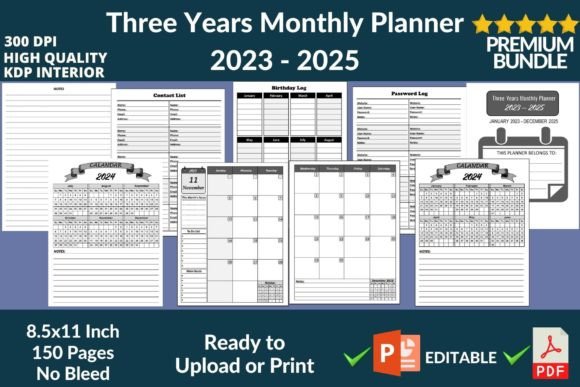
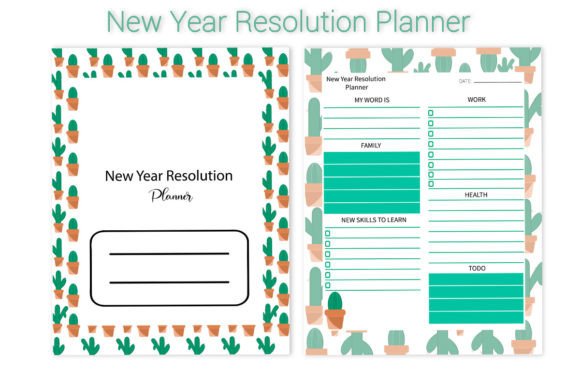
Consumers focused on personal finance, health, or home organization find the planner's tracking indispensable. A financial resolution to "save for a vacation" becomes a monthly savings target tracker. A health goal is broken into weekly meal plans and exercise logs. Even for individuals focusing on relationships or community involvement, the planner offers structure. Resolutions to strengthen family bonds or volunteer more can be specified into planned activities, scheduled dates, and measured outcomes like "four family outings per quarter." Not every planner is suitable for every person. Key considerations should guide selection and implementation. The physical or digital format is a primary decision. Physical planners, like those offered in downloadable print-ready formats—such as packages that include measures for 8.5×11 inches, AI files, PDF files, SVG files, and high-resolution JPEGs with 81 pages configured for CMYK color at 300 DPI—offer tactile engagement and can be more visually rewarding. Digital planners offer convenience, searchability, and easy sharing. The choice depends on personal workflow and preference. The level of granularity varies. Some planners are highly detailed, with daily logs. Others focus on monthly and quarterly reviews. Users should match the planner's depth to their own tolerance for maintenance. Overly complex planners can become burdensome. A critical consideration is realistic time allocation. Using a planner effectively requires periodic engagement: initial setup time in December or January, monthly review sessions (perhaps 30 minutes), and quarterly deeper reviews. Users must schedule this time as part of their resolution process itself. Perhaps the most important consideration is psychological flexibility. The greatest risk in using any structured tool is rigid adherence that leads to frustration. The user must embrace the iterative sections, understanding that the planner is a guide, not a contract. Adjusting a goal in March based on new data is a sign of effective use, not failure. A standalone planner can be powerful, but its impact is magnified when integrated with other personal or professional systems. For instance, the quarterly milestones from a personal New Year Resolution Planner can be entered as tasks in a digital calendar or project management app like Trello or Asana. Financial resolution targets can be linked to budgeting software. Health milestones can sync with fitness tracker apps. This integration creates a feedback loop. The planner provides the high-level strategy and annual vision, while the integrated tools handle the daily or weekly execution. The monthly review in the planner then becomes a moment to assess data aggregated from these other platforms—checking actual savings from the budget app, reviewing exercise data from the fitness tracker—making the review evidence-based rather than speculative. For teams or families, a planner's output can even be social. Individual quarterly goals can be shared with an accountability partner, a mentor, or family members. This transforms the private document into a basis for supportive conversation and shared encouragement, leveraging community to sustain individual effort. The fundamental innovation of the New Year Resolution Planner concept is its implicit reclassification of personal resolutions. It moves them from the category of "hopeful wishes" to the category of "managed projects." In the professional world, a project has a plan, resources, a timeline, milestones, risk assessments, and review phases. Applying this disciplined approach to personal aspirations is not about cold mechanization; it is about granting those aspirations the respect and resources they deserve to come to fruition. When a user engages with a well-designed planner, they are not just planning a year. They are practicing a meta-skill: the skill of effective goal architecture. This skill, learned through the annual cycle of using such a tool, becomes transferable. It can improve how one approaches any long-term challenge, not just those declared on January 1st. The planner, therefore, is more than a product for a season; it is a training device for a more purposeful method of living, one that recognizes that the best intentions require the strongest foundations.Considerations for Selection and Effective Use
Integration into Existing Workflows and Systems
The Underlying Principle: Treating Intentions as Projects
🔗 You Might Also Like