Simplify Your Week: A Guide to Using a Weekly Organizer
In a world of constant digital notifications and sprawling app ecosystems, many busy individuals are rediscovering the profound simplicity and focus offered by a handwritten weekly schedule. A weekly organizer, especially one designed as a printable template, serves as a tangible anchor for your time, providing a clear, structured canvas for your week's priorities. For professionals, creators, and anyone juggling multiple roles, this analog tool isn't about nostalgia; it's a practical strategy for reclaiming control and clarity.
The Core Value of a Structured Weekly View
Why commit your plans to paper when a smartphone is always at hand? The answer lies in the cognitive benefits. Writing down tasks and appointments engages your brain differently than typing them. It creates a stronger memory connection and encourages more thoughtful consideration of each item. A weekly planner template gives you a dedicated, consistent space for this practice. Viewing your entire week on one or two pages allows you to see relationships between commitments, spot potential overload early, and consciously allocate time for rest and deep work. This macro perspective is often lost in the day-by-day scramble of digital calendars.
From Chaos to Coherence: Practical Outcomes
Imagine a typical Monday morning. You have client emails, a project deadline mid-week, a family commitment on Thursday evening, and personal goals you want to progress. Without a central view, these elements exist in separate mental—or digital—silos, leading to reactive decisions and last-minute stress. Using a weekly schedule organizer, you can map all these elements onto a single timeline during a quiet Sunday planning session. This act alone transforms separate pressures into a manageable, integrated plan. You might visually block three hours for deep project work on Tuesday, see that Thursday is too packed, and proactively reschedule a less urgent task. The outcome is a coherent week where you proactively drive outcomes rather than react to events.
Who Benefits Most from a Printable Weekly Planner?
The utility of a printable weekly timetable extends across many roles. Freelancers and entrepreneurs can use it to balance client work, administrative tasks, and business development in a visual format, ensuring income-generating activities aren't overshadowed by daily busywork. Educators and bloggers can schedule content creation blocks, administrative duties, and research periods, safeguarding their creative energy. Parents managing household logistics alongside careers find a simple paper template invaluable for coordinating family schedules with work deliverables. Essentially, anyone whose week consists of disparate domains—professional, personal, creative, and logistical—will find value in unifying them on a single page.
A Tool for Intentionality, Not Just Tracking
A well-designed weekly agenda template encourages more than just logging appointments. Its structure prompts intentional planning. Seeing blank time slots encourages you to fill them with purpose, whether that's strategic thinking, learning, or exercise. The physical act of writing down a goal for a specific time slot, like "draft blog post outline from 9–11am," increases commitment. Furthermore, a minimalist, ink-friendly design, as found in many printable templates, reduces visual clutter, keeping your focus on priorities rather than decorative elements. This simplicity supports clear thinking and decisive action.
Navigating Limitations and Finding the Right Fit
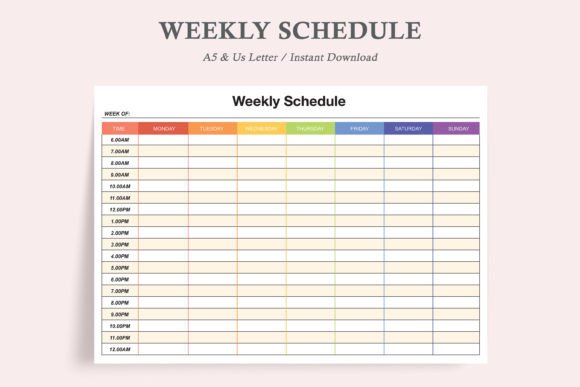
While a weekly planner printable offers significant benefits, it's important to consider its fit for your workflow. It excels at planning and high-level time allocation but is less optimal for detailed minute-by-minute scheduling or complex recurring event management that digital calendars handle well. Its strength is in proactive weekly strategy. Therefore, many users successfully pair it with a digital calendar for alerts and shared events, using the printable template as their primary planning and intention-setting tool each week. When choosing a template, consider the layout. Some prefer timed slots for strict scheduling, while others prefer open blocks for more flexible task grouping. The availability of multiple sizes, like US Letter and A5, also allows you to choose a format that fits your workspace or binder perfectly.
Implementing Your Weekly Organizer System
Starting with a new weekly schedule organizer is straightforward, especially with a digital template. The process typically involves purchasing the template files, downloading the PDFs or JPEGs, and printing them at home or a local shop. The "print as you need" model is economical and flexible. You might print several copies at once for a month of planning, or print a single copy every Sunday as part of your weekly ritual. The editable PDF feature some templates offer allows for minor customizations before printing, such as adding a title or week number. The key to success is consistency. Dedicate a brief session, perhaps 20 minutes each week, to populate your planner. Review it each morning to orient your day, and mark completed items—the physical feedback of seeing a filled planner is a powerful motivator.
Beyond the To-Do List: Supporting Broader Goals
A weekly calendar template's impact often ripples beyond simple task management. By providing a reliable structure, it simplifies decision-making; when an unexpected request arises, you can consult your planner to see if you truly have bandwidth, making "yes" or "no" decisions faster and with more confidence. For problem-solving, laying out project steps across a week can reveal new sequences or highlight bottlenecks. It strengthens communication when used in small teams or families; a printed schedule on a common bulletin board creates shared visibility. Ultimately, this tool supports your larger goals by ensuring they receive dedicated time slots week after week, transforming abstract ambitions into scheduled, executable steps.
In essence, a functional, simple weekly planner template is more than a piece of paper. It is a designated space for thinking about your time before it slips away. It respects the preference for analog tools while delivering professional-grade organization. For the busy person who values clarity and intentionality, integrating this practice can transform weekly planning from a source of hassle into a cornerstone of personal efficiency and achievement.