Why an ADHD Journal Could Be Your Key to Focus, Calm, and Clarity
For individuals navigating life with Attention Deficit Hyperactivity Disorder (ADHD), the daily experience can often feel like a juggling act. Thoughts, tasks, and emotions swirl with an intensity that is both a source of creative brilliance and a challenge to manage. Traditional organizational methods can feel restrictive, ill-fitting, or simply overwhelming. This is where a tool specifically designed for the ADHD mind—an ADHD journal—steps in. Far from a generic notebook, it’s a structured companion crafted to harness the unique strengths of ADHD while providing a gentle framework for focus and self-regulation.
Understanding ADHD: Beyond the Misconceptions
ADHD is often misunderstood as simply a lack of attention or an excess of energy. In reality, it’s a neurodevelopmental condition affecting executive functions—the brain's management system. This includes working memory, emotional regulation, impulse control, and task initiation. Someone with ADHD might have a brilliant idea (hyperfocus) but struggle to start the project (task initiation). They might feel intense emotions but find it hard to pause and process them (emotional dysregulation). The goal of managing ADHD isn’t to “fix” the brain but to build a supportive environment and toolkit that works with its wiring.
The Core Challenges an ADHD Journal Addresses
- Task Management: Breaking down overwhelming projects into tiny, actionable steps.
- Emotional Tracking: Identifying mood patterns and triggers to build emotional resilience.
- Memory Aid: Capturing fleeting thoughts, ideas, and commitments in a trusted external space.
- Routine Building: Establishing gentle, visual structures for daily and weekly rhythms.
- Self-Accomplishment: Providing a tangible record of progress to combat feelings of underachievement.
The Anatomy of a Purpose-Built ADHD Journal
So, what makes a journal an “ADHD journal”? It’s intentionally designed to reduce cognitive load and friction. Generic blank pages can feel like a daunting void, leading to avoidance. An effective ADHD journal interior provides guided prompts, flexible structure, and visual clarity that invites use rather than demands it.
Key Design Features for Usability
An ideal layout considers the following:
- Clear, Visual Segmentation: Using boxes, lines, and shaded areas to compartmentalize information without clutter.
- Prompt-Based Pages: Gentle questions like “What’s one tiny step I can take today?” or “How am I feeling right now?” guide the user without pressure.
- Space for Brain Dumps: Dedicated areas for unstructured, rapid-fire thought listing to clear mental cache.
- Progress Tracking: Simple checkboxes, rating scales, or habit trackers that offer visual feedback on consistency.
- Minimalist, High-Quality Formatting: A clean, professional interior that feels good to use and reduces distractions.
The Practical Relevance: From Daily Life to Creative Pursuits
The application of an ADHD journal stretches across every domain. In daily activities, it can transform morning routines from chaotic to coherent, helping prioritize the day’s top three tasks. In education and work, it serves as a central hub for project notes, meeting takeaways, and deadline breakdowns, combating working memory challenges. For creativity, it becomes a sacred space to capture impulsive ideas before they vanish, and later, to develop them. In managing technology overload, the journal offers an analog counterbalance, a place to reflect away from screens and notifications.
A Day with an ADHD Journal: An Example
Imagine a morning: Instead of feeling overwhelmed by a mental to-do list, you open your journal to a daily page. A small prompt helps you identify your primary focus. You jot down three “micro-tasks” for a work project. You quickly note an errand you must not forget. Later, when frustration arises in a conversation, you use an emotion-tracking section to briefly name the feeling and its possible cause, preventing an emotional spiral. At day’s end, you check off completed tasks, providing a concrete sense of accomplishment that internal memory often doesn’t register.
Finding the Right Tool: The KDP Interior for Instant Starters
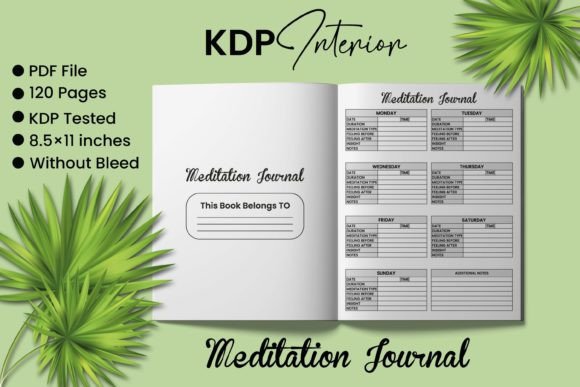
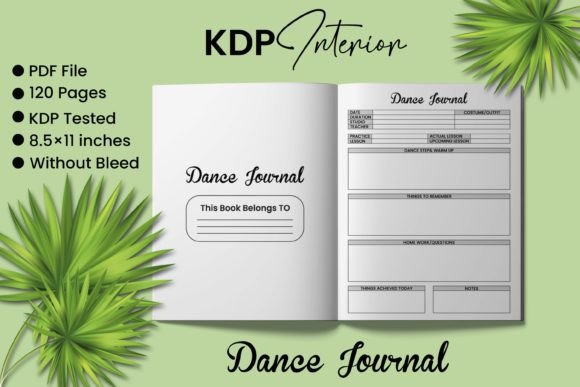
For those ready to implement this tool—whether for personal use or as a creator looking to publish a helpful resource—the process of designing a journal from scratch can itself be a daunting task. This is where professionally designed, ready-to-use interiors become invaluable. Consider a unique “ADHD Journal KDP Interior” available for instant download. This isn’t just a template; it’s a complete, high-quality foundation.
What a Ready Interior Provides
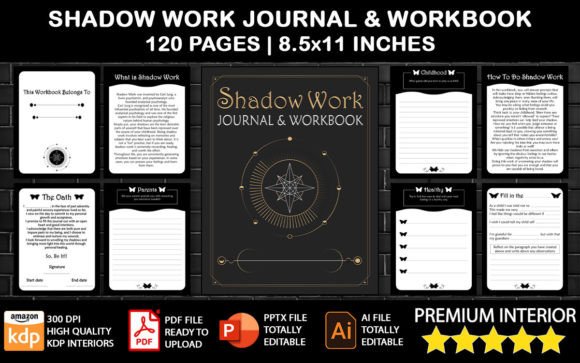
- Immediate Implementation: You receive a ready PDF file to upload directly to platforms like Amazon KDP (Kindle Direct Publishing), bypassing complex design work.
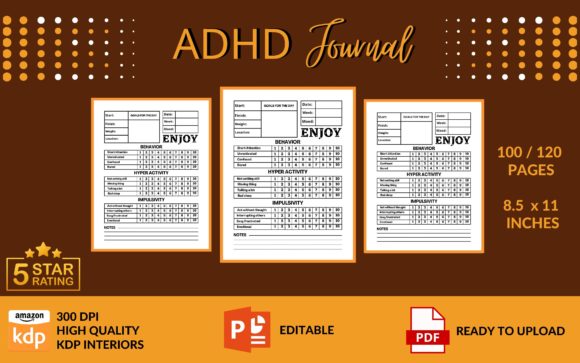
- Professional Specifications: Crafted to standard 8.5 x 11 inches, typically spanning 100 to 120 pages, and formatted as a without bleed interior perfect for paperback journals.
- Full Customization Potential: Along with the PDF, an editable PowerPoint (PPT) file allows you to personalize colors, prompts, or layouts before publishing.
- Quality Assurance: A high-quality interior ready to upload means the design is polished, print-ready, and crafted with an understanding of both ADHD needs and KDP technical requirements.
Such a resource empowers individuals to quickly access a tailored journal, or enables entrepreneurs, therapists, or coaches to publish a supportive product without investing months in design.
Building a Broader Understanding: The Journal as a Bridge
Ultimately, an ADHD journal is more than a productivity tool. It acts as a bridge between one’s internal, often chaotic, experience and the external world’s demand for order. It validates the ADHD experience by providing a format that acknowledges scattered thoughts, intense emotions, and fluctuating focus—not as failures, but as data points to be managed with kindness and strategy. It shifts the narrative from “I need to remember everything” to “I have a trusted system to hold things for me.”
Clarifying Common Assumptions
A frequent misunderstanding is that such journals are restrictive or infantilizing. The opposite is true. A well-designed journal offers structure for freedom. By outsourcing the burden of working memory and prioritization to paper, it frees up mental energy for creativity, deep thinking, and presence in relationships. It’s a tool of empowerment, not constraint.
Integrating the Journal into Modern Life
In a fast-paced, digital world, the analog act of journaling provides a crucial pause. It complements technology, not replaces it. You might set a digital reminder to “check your journal,” or transcribe a digital note into its longer-term storage. The journal becomes the curated, reflective core, while apps handle the alerts and synchronization. This hybrid approach aligns perfectly with the ADHD need for both external structure and personal, tactile engagement.
Whether you are exploring ADHD management for yourself, supporting a loved one, or looking to publish a resource that makes a real difference, the concept of a dedicated ADHD journal represents a practical, compassionate step forward. It’s an acknowledgment that the right tools, designed with understanding, can turn daily challenges into manageable patterns and unlock the profound creativity and dynamism that often accompanies the ADHD mind. Starting with a professionally crafted interior is simply the fastest way to bring that tool from idea into daily, helpful practice.